
 It is generally accepted that duckpin bowling originated in Baltimore in 1900. There are references to it as far back as 1892 in the Boston Globe, claiming the sport to be of New England birth. Personally, I prefer the Maryland version, attributing it to the efforts of John McGraw the famous New York “Baseball” Giants Hall of Fame
 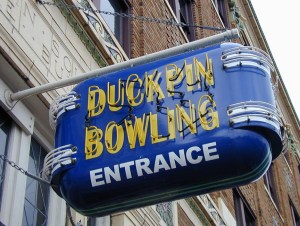 manager and Wilbert Robinson, the Hall of Fame catcher who played for two Baltimore Orioles teams; from 1890 – 1899 (the National League team that folded after 1899), and the 1901-02 Orioles of the American League, who moved to New York City in 1903 to become the Yankees. That’s right, those Yankees.
Growing up in Maryland with duckpins was terrific. During my formative years (the 60s) the sport was in its heyday. My best friend’s dad coached our  team and Saturdays were anxiously anticipated. I couldn’t wait to get to the lanes for the bowling (but really for the French fries). Bowling Alley fries were the best. That was when they cooked them in real fat, not this sissy trans-fat-less stuff we use today. Grease, salt and ketchup . . . . mmmmm, the best. We were active kids, not slothy adults, so the cholesterol didn’t clog our arteries. In my adult years I bowled with a fellow who drenched his French fries in mustard. If we wanted to snatch a fry or two while he was on the lane bowling, we had to eat them with the yellow stuff. I guess his intent was to thwart our thievery of his snack. It worked. Or maybe he just liked them with mustard. On our team, he was the only one.
During the 1960s there were Fair Lanes alleys all over Maryland, and several independent lanes, as well. The sport was going strong. I 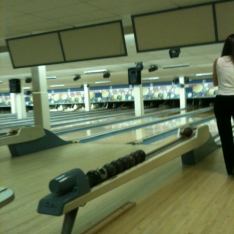 bowled on leagues in Suitland, Forestville (Parkland), Queenstown, Hyattsville (Prince George’s Plaza), Marlow Heights, Catonsville (Westview), Laurel (with mustard guy), Silver Spring (White Oak), Riverdale (Rinaldi), Wheaton (Glenmont), College Park, and probably a couple of places I’ve forgotten.
The good thing about duckpin bowling is anybody can do it. The balls are small, weighing from 2 to a maximum of 3.75 lbs. But don’t get the impression it is easier than ten pins, because it’s not. You can throw the ball right down the middle and “chop” for just two pins. No one has ever bowled a perfect 300 game in duckpins, but in ten pins it is a frequent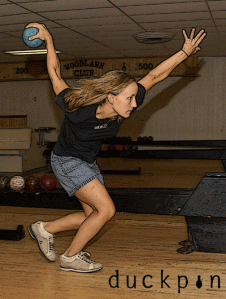 occurrence. Many ten pin bowlers think they’re “tough guys” because they can roll the heavy ball down the lanes. They ain’t so tough when ending up with two pins for a whole frame because the first ball chopped, and the next two were rolled through the hole. I guess they really don’t appreciate the challenge and precision necessary to be a good duck pinner, so they make fun of it.
With the game disappearing, there won’t be as many opportunities to test their skill as in the past. The executive director of the National Duckpin Bowling Congress said in 2016 that there were 41 congress-certified duckpin bowling alleys, down from nearly 450 in 1963.  The biggest factor in the decline was the demise in 1973 of the only company manufacturing automatic pinsetters (one source says it was 1969).
Ken Sherman invented the automatic pinsetter for duckpins in 1954, but refused to sell the rights to Brunswick because he didn’t want to leave New England. Shortly thereafter, AMF developed a pinsetter for ten pins, and eventually the device became the preferred equipment due to their willingness to expand and Sherman’s desire to stay at home. His company didn’t survive, and today Fair Lanes establishments are named AMF.
After enlisting in the Air Force in 1969, I came back to Maryland in 1973, but didn’t join a league until 1980. Then I bowled for a few more years and stopped in 1987. I still had the itch, so in 1992 I organized a tournament for my employer, which included 40 teams, with 5 bowlers each from companies with whom we did business. Two hundred people participated during the middle of February to have a grand time of socializing and duckpin bowling. It was required that each team have at least two females, so those participating would have to allow the clerical employees (peasants) to take the afternoon off to bowl. Otherwise, they would just send the males, who usually golfed and found other ways to waste their afternoons while the peons did the work.
After five tournaments I left the company, but the event survives to this day. We gave trophies for 1st, 2nd, 3rd and Last Place finishers.  That’s all fine and dandy, but my preferred awards were for Best Team Name and Best Bowling Attire. My favorite team name and attire (designed by my son) is in the picture to the left.
Many of you reading this participated in one or more of those tournaments. Most of the pictures from the 1996 Awards Ceremony are posted in the sidebar link “5th Annual CIC Tournament Pictures,” which is under the “Duckpin Bowling” category. Take a peek and you may find yourself or someone you know. Don’t be alarmed by how much older and fatter you look today. It’s always fun to see what used to be.
If you have not bowled duckpins in the past (or even if you have), find an alley and have a good time. Take the kids. Most centers will put down gutter bumpers, so the ball stays on the lane, and the child feels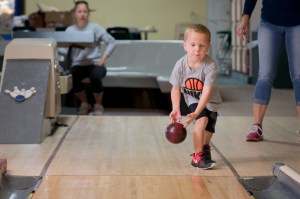 like a star. Spend a few minutes clicking on the links (particularly the videos) in the sidebar under “About Duckpin Bowling.” You might want to check out Robin’s Web, a site devoted to the sport.
It won’t be long before duckpins are completely gone. The equipment can’t last forever.
Roll one for the Gipper.
With Love,
Bake My Fish

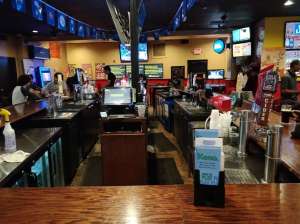 Town Hall has been open since 1960. That’s quite an accomplishment for a drinking spot. Those that come and go are usually “theme” bars catering to whatever fad or style is temporarily occupying the minds of its semi-loyal patrons. Dance clubs seem to last the least amount of time, usually laid waste by fights, drug busts, marriage, and the quick aging and waning interest of its clients. But Town Hall has lasted through student migrations, sporting event-driven traffic, all the
 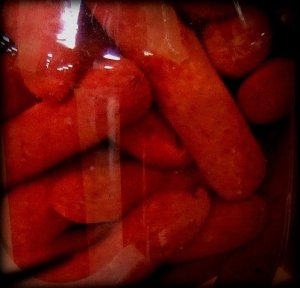 that I only had the nerve to eat once, and an unpretentious atmosphere. It worked.
 ny other
  entourage decide to shove off for haute cuisine, laced with over-priced, but oh-so-pretty beverages. Once the children are gone, the Slim Jims and suds taste better.
 I was in the neighborhood on business, but beer, pool and peanuts are not on the agenda. When home, I play pinball on my computer, shaking the machine with keystrokes. Diet soda in a can or plastic bottle is my “draft.”
 hungry. Chicken tenders and wings have become old hat, and nachos or chili go in easy and exit violently. What to order? What? Then the hot waitress or waiter you’ve been ogling and hoping may find you appealing, suggests sliders.
 taverns and restaurants lately, and now’s your chance to check them out. Hell, even
  trade. Then in 1928 Harry Duncan relocated from Louisville, KY to Washington, DC and opened the
  were cooked. The “chef” would line the grill with little balls of meat, with chopped onions and fry a bunch, then place them on the small buns along with a pickle and store them covered by a damp towel in a drawer under the grill.
 sandwiches that needed to be heated in their toaster ovens (microwaves weren’t available), so my late-night meals were three LT deathballs and a cup of coffee. I’m not one who usually goes for coffee with anything other than breakfast. It just sort of says, “I’m an old fart and don’t care anymore.” Coffee with dinner just doesn’t seem right. But, at Club LT the coffee was delicious, served in the thick mugs that somehow made it better. Not to mention, I needed the caffeine buzz to continue working.
 driving zone, my favorite cab stand was the College Park Little Tavern, referred to by the cab company as “The Ritz.” Since this location was right across the street from the
  , but “Buy ’em by the bag” was the slogan. When Harry started the business, burgers were a nickel, so walking out with a bag full was a pretty easy task. You could feed the whole family.
 living on in its evolved form. The next time you’re at the Green Turtle, Burger King, Chili’s or any place advertising sliders, think of Harry Duncan as you bite into your order. They’re no longer a nickel, and probably not as good, but three deathballs and coffee always hit the spot.
 sell Ecko Hope Chests on the streets of Washington, DC. Don’t try it, it doesn’t work. It didn’t work in 1973, and it won’t work today.
 stoned and mellow, with sunglasses and a cool mustache, or the jittery dork, with the sneaky-looking nose hairs, wearing a polyester suit and platform shoes, desperately seeking a dollar, who looks like he just fell off the lettuce truck. As you can guess, there weren’t many appointments in my future.
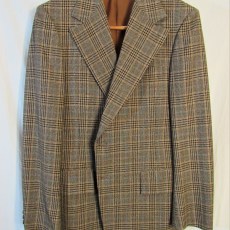 needed a rain hat. That evening, I went to Debbie’s (I remembered her name) apartment in Wheaton and knocked on the door. During my last few months in Taiwan, I had several suits tailored (very cheaply) in the finest polyester double-knit fabric available. My duds were proudly displayed on my slim body. That particular day, I was wearing my rust-colored, maxi-patterned, plaid suit (similar to the picture). The shirt was beige; accented with a fine, matching non-silk tie. In my left hand dangled the handle of my sample case. One of her roommates came to the door and fingered my lapel and said, “Really nice,” in as sarcastic a way as he could. But he invited me in. This was the opening scene in Death of a Salesman.
 thought. So, I nodded and said, “It looks very healthy (as if I knew).” But I was thinking, “I need a sale.” Debbie walked out of the kitchen to greet me, and two other female roommates came out of the bedroom to say hello. The Botanist was the only male living with three women, all very cute. Then they asked if I wanted to party. Tempting as it was, I had to leave. There was no way a sale would be made among this group, and it didn’t really matter why my prospect agreed to allow me to come by (even though it was intriguing). I pulled the packaged rain hat out of my suit pocket and gave it to Debbie, but Botany Man grabbed it, peeled off the wrapper, and put it on his head. “Really nice,” I said in as sarcastic a way as I could, politely thanked everyone for their time, and left.
 One of my favorite musicians was Root Boy Slim; circa late 70s – early 80s. He was a genius, who attended Yale University and was a fraternity brother of George W. Bush (in fact when George took over as Fraternity President, he kicked Root Boy out of the club). His real name was Foster McKenzie, III. A noble name for a person thought by most to be a derelict; the type of guy you expected to be living in a Whirlpool refrigerator box over a steam grate in Washington, DC. Well, he did have an apartment above a garage in Silver Spring, MD at one point in time. If you have an interest in him, check out his biography
  wonder and fascination of Root Boy Slim . . . . it is to lead into “Dare to Be Fat.”
 attention to what you are consuming before you are at the point of no return. Losing weight is not particularly enjoyable. I feel deprived. I also feel good.
 Boomer Twilight